Showing posts with label Virgina. Show all posts

Precision in Motion: Exploring USI’s SmartStep and SmartStep X-Series Actuators

Precision in Motion: Exploring USI’s SmartStep and SmartStep X-Series Actuators

USI Technologies has developed a reputation for producing reliable, high-performance electric actuators, and their SmartStep and SmartStep X-Series models exemplify this commitment. These actuators meet the rigorous demands of industrial valve automation, offering both precision and durability.

The SmartStep X-Series actuators handle a range of torque requirements, with options available at 500, 1200, 2500, and 5000 in-lbs. They feature a heavy-duty NEMA 4-rated cast aluminum enclosure, ensuring protection against harsh environmental conditions. The actuators are certified for Class 1, Division II, Groups A, B, C, and D hazardous locations, making them suitable for various industrial applications.

One of the standout features of the X-Series is its non-contact position-sensing technology, which eliminates mechanical switches and reduces wear and tear on the system. This design choice enhances the longevity and reliability of the actuators. Additionally, the X-Series includes a capacitor-based electronic power backup system, allowing the actuator to return to a pre-programmed safe position in the event of a power loss. This backup system boasts a lifespan of over ten years, providing long-term peace of mind for operators.

The actuators offer customizable speed settings, allowing users to adjust the open/close speed to fit specific application needs. For instance, the X0400 model can achieve a 90° rotation in as little as 3 seconds, while the X5000 model can do so in up to 35 seconds. This flexibility ensures that the actuators can be tailored to a wide range of operational requirements.

In terms of control and feedback, the X-Series supports both 4-20mA and 0-10V DC control inputs with programmable feedback standards. This allows for remote reading of the actuator shaft's exact position, facilitating precise control and monitoring. The actuators also support MODBUS RTU and TCP protocols, ensuring compatibility with various control systems.

For those in the Commonwealth of Virginia seeking these advanced actuator solutions, Automatic Controls of Virginia stands as a trusted distributor and service provider. With a commitment to delivering high-quality products and exceptional customer support, they are well-equipped to assist with the selection, installation, and maintenance of USI's SmartStep actuators.

Automatic Controls of Virginia
https://acva.com
(804) 752-1000

Why Mechanical Switches Remain Essential in Today's Industrial Instrumentation

Why Mechanical Switches Remain Essential in Today's Industrial Instrumentation

Mechanical industrial pressure and temperature switches, the reliable backbone of safety systems, process controls, and equipment protection, are indispensable in today's industrial instrumentation schemes. Their reliability, simplicity, and ability to function under harsh conditions where electronic sensors might fail, instill a sense of security and confidence in their use.

Maintaining precise control over pressure and temperature is essential for efficient and safe operations in industrial environments. Mechanical switches provide direct and immediate responses to changes in these parameters. Unlike electronic sensors that require power sources and can be susceptible to electromagnetic interference, mechanical switches operate purely on mechanical movement. This independence from external power enhances their reliability, especially in critical applications where power loss could lead to catastrophic consequences.

The robustness of mechanical pressure and temperature switches makes them ideal for use in extreme conditions. They can withstand high temperatures, vibrations, and corrosive environments without compromising functionality. For instance, these switches are often used in drilling operations where heat or pressure surges in the oil and gas industry might damage electronic devices. Their ability to perform consistently in such demanding situations ensures continuous monitoring and control, preventing accidents and equipment failures.

The simplicity and ease of maintenance of mechanical switches, their straightforward design that allows for quick troubleshooting and repairs, instills a sense of practicality and cost-effectiveness. Technicians can easily adjust setpoints and calibrate the switches without the need for specialized tools or software, reducing maintenance costs and enhancing overall operational efficiency.

Mechanical switches also provide fail-safe operation, a critical feature in safety systems. In the event of system failure or loss of power, these switches can default to a safe state, triggering alarms or shutting down equipment to prevent damage or injury. This inherent safety mechanism is vital in industries such as chemical manufacturing, where uncontrolled reactions due to pressure or temperature deviations can have severe consequences.

The continued relevance of mechanical pressure and temperature switches is also evident in their compatibility with various industrial standards and certifications. They meet stringent safety and performance requirements, making them suitable for regulated industries. Their proven track record over decades of use instills confidence in engineers and plant operators who rely on these devices for critical applications.

In an era where digitalization and automation are transforming industries, mechanical switches still hold significant importance. They often serve as primary control devices or backups to electronic systems, providing an extra layer of safety and reliability. Their ability to operate independently of complex software or power supplies makes them indispensable in scenarios where electronic systems might be vulnerable.

Mechanical industrial pressure and temperature switches remain integral components of modern industrial instrumentation schemes. Their reliability, robustness, and simplicity make them essential for maintaining safety, efficiency, and continuity in industrial operations. As industries continue to evolve, these mechanical devices will continue to provide the dependable performance that has made them a cornerstone in industrial processes worldwide.

Custom Control Sensors (CCS) mechanical switches offer an exceptional choice for chemical, power, oil and gas, and water treatment applications. CCS has built a reputation for delivering high-quality mechanical pressure and temperature switches that meet the rigorous demands of these sectors. Their switches provide unmatched reliability and durability, essential for environments where equipment must perform flawlessly under extreme conditions.

Moreover, CCS emphasizes compliance with industry standards and certifications, offering assurance that its switches meet the stringent requirements of regulated industries. Its commitment to quality and innovation makes it a trusted partner for companies seeking dependable mechanical switches for critical applications. By choosing CCS mechanical switches, businesses in the power and water treatment sectors can breathe a sigh of relief, knowing they are investing in devices that are not only reliable but also easy to install and maintain, reducing downtime and operational costs.

Automatic Controls of Virginia
https://acva.com
(804) 752-1000

Ensuring Water System Integrity with the Val-Matic Resilite Combination Air Valve

Ensuring Water System Integrity with the Val-Matic Resilite Combination Air Valve

AWWA Standard C512 is a technical standard published by the American Water Works Association (AWWA). Titled "Air Release, Air/Vacuum, and Combination Air Valves for Waterworks Service,"  it provides specifications and guidelines for the design, construction, testing, and operation of air release valves, air/vacuum valves, and combination air valves used in waterworks service. These valves are crucial in water distribution systems to manage air pockets and vacuum conditions, ensuring efficient and safe operation. They help prevent damage from water hammers, maintain pipeline integrity, and provide clean water delivery to consumers.

The Val-Matic Resilite Combination Air Valve exemplifies superior engineering in managing air and vacuum conditions within water distribution systems. This valve, designed for municipal waterworks, combines advanced functionality with robust construction, ensuring reliable performance and long-term durability. The Resilite Combination Air Valve effectively releases air during system filling and admits air during drainage or vacuum. This dual functionality prevents airlock, mitigates potential water hammer effects, and maintains optimal hydraulic conditions within pipelines, safeguarding infrastructure and reducing maintenance costs.

The valve's construction emphasizes resilience and corrosion resistance, utilizing durable polymers and reinforced components. These high-quality materials ensure longevity under various environmental conditions, from harsh climates to corrosive water chemistry. The robust design enhances operational reliability and minimizes downtime and maintenance interruptions, which are crucial for ensuring an uninterrupted water supply to communities.

Innovative features within the valve enhance its usability and performance. Precision-engineered mechanisms allow for efficient air release and intake without compromising system pressure or flow dynamics. Rigorous testing protocols validate the valve's performance under simulated operational conditions, ensuring compliance with industry standards and regulatory requirements. These features highlight Val-Matic's commitment to delivering solutions that meet and exceed the expectations of waterworks professionals worldwide.

The valve's design is not just about performance, but also about practicality. Considerations for ease of installation and maintenance are built into the design. User-friendly features simplify assembly and servicing procedures, reducing labor costs and optimizing operational efficiency for water utilities and engineering firms alike. This focus on practical usability underscores Val-Matic's dedication to providing high-quality, reliable solutions for the waterworks industry, making the valve a cost-effective choice for professionals.

The Val-Matic Resilite Combination Air Valve is a testament to engineering excellence in water distribution technology. By integrating cutting-edge design with robust construction and user-centric features, this valve sets a benchmark for reliability, efficiency, and longevity in managing air and vacuum conditions within municipal water systems. Communities relying on resilient infrastructure for clean and reliable water supply can trust the Val-Matic Resilite Combination Air Valve to ensure the integrity and efficiency of their water distribution networks. This valve remains a preferred choice for waterworks professionals seeking to maintain optimal system performance and safeguard against potential damage. The Val-Matic Resilite Combination Air Valve is a symbol of the blend of innovative engineering and practical design that defines high-quality water distribution solutions, instilling confidence in its performance.

Automatic Controls of Virginia
https://acva.com
(804) 752-1000

Valve Operators: Worm Gear Actuators, Planetary Gear actuators, and Mechanical Spring Returns


Valve Operators: Worm Gear Actuators, Planetary Gear actuators, and Mechanical Spring Returns

Worm Gear Actuators:

Worm gear actuators play a crucial role in industrial valve actuation and automation. These actuators consist of a worm gear, a threaded rod, and a worm wheel, a gear with teeth that mesh with the threads of the worm. The worm gear actuator operates by rotating the worm, which, in turn, causes the worm wheel to rotate. This rotation is then transferred to the valve stem, causing the valve to open or close.

In industrial applications, a motor usually drives the worm gear. The design of worm gear actuators provides a self-locking feature because the worm wheel cannot move the worm, making them ideal for holding a position without the need for a brake or a lock. Additionally, the worm gear design allows for a high torque output, which is particularly useful for large valves or those that require a significant amount of force to operate.

Planetary Gear Actuators:

Planetary gear actuators are another gear actuator used in industrial valve automation. These actuators consist of a central sun gear surrounded by several planet gears, all enclosed within a ring gear. The sun gear connects to the motor shaft, and as it rotates, it drives the planet gears, which revolve around the inside of the ring gear. This rotation is then transferred to the valve stem, causing the valve to open or close.

Planetary gear actuators are particularly suited for high torque and speed applications. The design of the planetary gears allows for an even distribution of load across multiple gear teeth, which results in higher torque capabilities and increased efficiency. Additionally, planetary gear actuators often come with a manual override feature, which allows for manual valve operation in case of an emergency or power failure.

Mechanical Spring Returns:

Mechanical spring returns are used in industrial valve actuation to provide fail-safe operation. A spring return actuator uses a spring to return the valve to a pre-determined position (either open or closed) in case of a power failure or loss of signal. This type of actuator usually consists of a pneumatic or hydraulic actuator combined with a spring pack.

During regular operation, the pneumatic or hydraulic actuator controls the position of the valve. However, if there is a loss of power or signal, the spring pack takes over and moves the valve to its fail-safe position. This feature is essential in many industrial applications, as it ensures the system's safety and prevents damage to equipment or the environment in an emergency.

In conclusion, worm gear actuators, planetary gear actuators, and mechanical spring returns are all essential components in industrial valve actuation and automation. Each actuator type has unique features and advantages, making them suitable for different applications. Worm gear actuators are ideal for applications that require a self-locking feature and high torque output, planetary gear actuators are suited for applications that require high torque and speed, and mechanical spring returns are essential for providing fail-safe operation.

WedgeRock, a premier manufacturer of Gear Actuators, Planetary Gear Actuators, and Mechanical Spring Returns, delivers solutions for the most challenging torque and thrust applications. Whether it involves operating valves located several thousand meters beneath the sea or designing a specialized gear operator for your valve line, WedgeRock, in collaboration with Automatic Controls of Virginia, can help you identify and implement the optimal solution for your specific needs.

Automatic Controls of Virginia
(804) 752-1000

Automatic Controls of Virginia: Decades of Trust, Experience, and Expertise in Valve Automation Services

Automatic Controls of Virginia: Decades of Trust, Experience, and Expertise in Valve Automation Services

Since its inception, Automatic Controls of Virginia has been at the forefront of the valve automation industry, demonstrating an unwavering commitment to quality, innovation, and customer satisfaction. With decades of experience, they've established an impeccable reputation as a trusted partner for all valve actuation needs.

As a leading provider in the valve automation industry, Automatic Controls of Virginia prides itself on its comprehensive, end-to-end service delivery model. The company has complete in-house fabrication and assembly capabilities, a rarity that significantly sets them apart. This in-house model ensures that every part of the process, from design and fabrication to assembly and testing, is under direct control, enabling seamless integration and efficient service delivery and ensuring superior quality control at every stage of the process.

The seasoned team at Automatic Controls of Virginia brings together an extraordinary breadth of application experience, encompassing various industries such as water and wastewater, oil and gas, power generation, pulp and paper, and beyond. Their industry-spanning expertise is backed by impressive technical know-how, enabling them to offer innovative and practical solutions tailored to each application's unique requirements.

The importance of a top-tier valve automation partner cannot be overstated. In an increasingly complex and rapidly evolving industrial landscape, organizations need a partner to provide them with advanced, reliable, cost-effective valve automation solutions, precisely where Automatic Controls of Virginia shines. With their proven track record and an unwavering commitment to customer satisfaction, they are the go-to choice for any organization needing a trusted valve automation partner.

With Automatic Controls of Virginia, customers are not just purchasing a product or a service. They invest in relationships built on trust, expertise, and a shared commitment to achieving their operational objectives. With an exceptional customer service team ready to consult on all your valve actuation needs, they provide a service that is not only technologically advanced but also customer-focused.

Over the decades, Automatic Controls of Virginia has built its name on reliability, innovation, and outstanding service. The firm's extensive industry experience, in-house fabrication and assembly capabilities, and broad application experience make it an ideal partner for all valve automation needs. Trust Automatic Controls of Virginia to deliver solutions that are effective and reliable and designed to meet your specific operational needs.

Experience the difference with Automatic Controls of Virginia. Discover why so many businesses trust them as their valve automation partner and enjoy the peace of mind of knowing your valve actuation needs are in the most capable hands. Look no further than Automatic Controls of Virginia for decades of experience, comprehensive capabilities, and a commitment to your success.

For more information, contact:

Automatic Controls of Virginia
(804) 752-1000

Mechanical Pressure and Temperature Switches: The Vital Role They Play in the Chemical Processing Industry

Mechanical Pressure and Temperature Switches: The Vital Role They Play in the Chemical Processing Industry

The chemical processing industry is a critical sector that transforms raw materials into valuable and functional products. All processing plant components must function optimally to ensure efficiency and safety. A crucial element in these facilities is mechanical pressure and temperature switches, which play a vital role in controlling and monitoring various processes. 

Safety and process control

The chemical processing industry often involves hazardous materials, extreme pressures, and temperatures. Mechanical pressure and temperature switches are vital in ensuring the safety of the equipment and personnel in these facilities. They function as safety devices, monitoring, and controlling processes to prevent accidents and damage to equipment. They can detect deviations from the desired process conditions and trigger necessary actions to maintain the desired pressure and temperature levels.

Improved efficiency and productivity

Mechanical pressure and temperature switches contribute to overall efficiency in chemical processing plants. These switches optimize the use of energy, resources, and time by providing precise control over process conditions. This results in reduced waste, energy consumption, and increased productivity, which is essential for a competitive and sustainable industry.

Regulatory compliance

The chemical processing industry is subject to strict regulations concerning safety, environmental impact, and product quality. Mechanical pressure and temperature switches help plants comply with these regulations by ensuring processes operate within the required parameters. Proper process control also reduces the risk of accidents and emissions, preventing potential fines and legal actions.
Applications of Mechanical Pressure and Temperature Switches in the Chemical Processing Industry

Reactor control

Chemical reactions often require specific pressure and temperature conditions to proceed optimally. To monitor and maintain these conditions, mechanical pressure and temperature switches are employed in reactor vessels, ensuring that the reactions occur efficiently and safely.

Distillation columns

Distillation is a widely used separation technique in the chemical industry. Pressure and temperature switches are essential in distillation column control, ensuring the proper operating conditions are maintained, allowing for the efficient separation of components, and preventing the possibility of column flooding or equipment damage.

Heat exchangers

Heat exchangers are commonly used in chemical processing to transfer heat between fluids. Mechanical pressure and temperature switches are vital in maintaining the desired conditions within heat exchangers, preventing overheating and ensuring the heat transfer process occurs efficiently.

Pump and compressor control

Pumps and compressors are crucial components in the chemical processing industry that transport fluids and gases throughout a plant. Pressure and temperature switches help control these devices' operation, ensuring that they function optimally and safely.

Mechanical pressure and temperature switches play a crucial role in the chemical processing industry, ensuring various processes' safe and efficient operation. They contribute to improved productivity, regulatory compliance, and the industry's overall competitiveness. As technology advances, these switches will become even more sophisticated and reliable, enhancing their importance and application in the chemical processing sector.

For more information about CCS pressure and temperature switches in Virginia, contact Automatic Controls of Virginia. Call them at 804-752-1000 or visit their web site at https://acva.com.

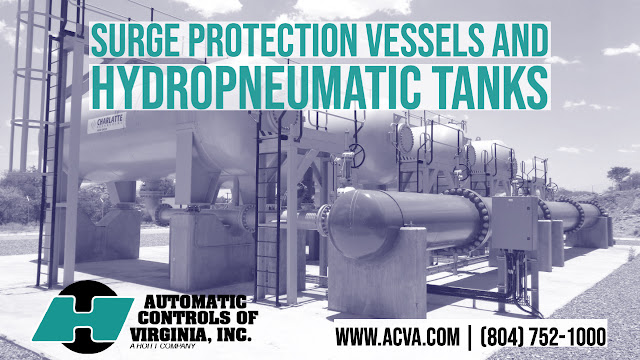
Surge Protection Vessels and Hydropneumatic Tanks: Their Use in Water Treatement

Surge Protection Vessels and Hydropneumatic Tanks

Hydropneumatic tanks and surge protection vessels are essential for water supply and treatment systems. They serve different purposes, but both help maintain the efficiency and integrity of water systems.

Hydropneumatic Tanks: Hydropneumatic tanks are used in water supply systems to store and manage pressurized water. They create a pressurized environment to ensure a steady water flow to the end users. These tanks consist of an air-filled space above a water storage area, separated by a flexible diaphragm or bladder.


In the water treatment industry, hydropneumatic tanks provide various services:


  1. Pressure regulation: Hydropneumatic tanks help maintain consistent water pressure throughout the distribution system, which is essential for adequately functioning treatment equipment and end-user appliances.
  2. Storage: These tanks store water in a pressurized state, ensuring a continuous water supply during peak demand periods or in case of power outages or pump failures.
  3. Shock absorption: Hydropneumatic tanks help absorb water hammer or pressure surges, which can occur when pumps start or stop suddenly, preventing damage to the pipeline and other system components.


Surge Protection Vessels: Surge protection vessels, also known as surge tanks or surge arrestors, are designed to protect water supply systems from pressure surges or water hammer. These surges can occur due to sudden changes in flow velocity, such as when a valve is closed, or a pump is started or stopped. Pressure surges can cause damage to pipes, fittings, and other system components, leading to leaks, ruptures, or even system failure.


In the water treatment industry, surge protection vessels:


  1. Absorb excess pressure: Surge protection vessels have an air cushion or gas-filled bladder that compresses when pressure surges occur, absorbing the extra stress and preventing it from damaging the system.
  2. Dampen pressure oscillations: These vessels help to dampen pressure oscillations, minimizing the impact of water hammer and reducing the risk of damage to system components.
  3. Protect equipment: By mitigating the effects of pressure surges, surge protection vessels help extend the life of pumps, valves, pipes, and other equipment in the water treatment system.


Hydropneumatic tanks and surge protection vessels play critical roles in the water treatment industry by ensuring consistent water pressure, storing during peak demand, and protecting system components from damage due to pressure surges and water hammer.


For more information, contact:

Automatic Controls of Virginia
(804) 752-1000

Pneumatic Actuators in Water and Wastewater Treatment

Pneumatic Actuators in Water and Wastewater Treatment

Pneumatic valve actuators are widely used in water and wastewater treatment facilities to control the flow of fluids and to regulate the pressure of process streams. These actuators use compressed air to actuate and manage the process control system valves. The following is a detailed explanation of how pneumatic valve actuators are used in water and wastewater treatment facilities:
  1. Control of fluid flow: Pneumatic valve actuators are used to control water and wastewater flow in treatment facilities. They are responsible for opening and closing the valve to regulate the flow rate, ensuring that the right amount of fluid is transported at any given time.
  2. Regulating pressure: Pneumatic valve actuators control the pressure of process streams in water and wastewater treatment facilities. This is important to maintain a consistent and stable process flow, ensuring that the desired conditions for treatment are maintained.
  3. Isolation of process streams: Pneumatic valve actuators isolate different process streams in water and wastewater treatment facilities. This helps prevent cross-contamination of other streams, which is critical for maintaining the treated water or wastewater quality.
  4. Safety control: Pneumatic valve actuators play an essential role in the safety control of water and wastewater treatment facilities. In case of an emergency or a process upset, pneumatic valve actuators can quickly shut down the process stream, reducing the risk of harm to personnel and equipment.
  5. Process automation: Pneumatic valve actuators can be integrated into the process control system, allowing for automated treatment process control. This reduces the need for manual intervention and increases the efficiency of the treatment process.
In conclusion, pneumatic valve actuators play a critical role in controlling and regulating water and wastewater treatment processes. They ensure that the process streams are correctly managed, isolated, and regulated, leading to a more efficient and effective treatment process.

For more information, contact:
Automatic Controls of Virginia
(804) 752-1000

The Val-Matic American-BFV® Butterfly Valve


The Val-Matic American-BFV® Butterfly Valves are the butterfly valve of choice for shut-off service in water systems. The American-BFV® Butterfly Valve line is designed to provide long life, low headloss and trouble-free performance.

The valve is available in 3 inch to 144 inch Flanged connections, Mechanical joint end connections from 4 inch to 48 inches, and 4 inch to 12 inch Wafer design.

If maintenance becomes necessary, the valve is also designed for easy field service. Adjustment of the resilient seat is easily performed with a torque wrench, as compared to epoxy filled seats that require special equipment and materials or bonded seats that cannot be replaced or adjusted in the field. 

Automatic Controls of Virginia
https://acva.com
(804) 752-1000